Personal, Library, AI
Follow my journey organizing hundreds of notes, PDFs, and articles that transitioned from a cluttered set of documents that never became truly connected on Obsidian, to a knowledge library that now has a protocol for cleaning clutter and connected themes.
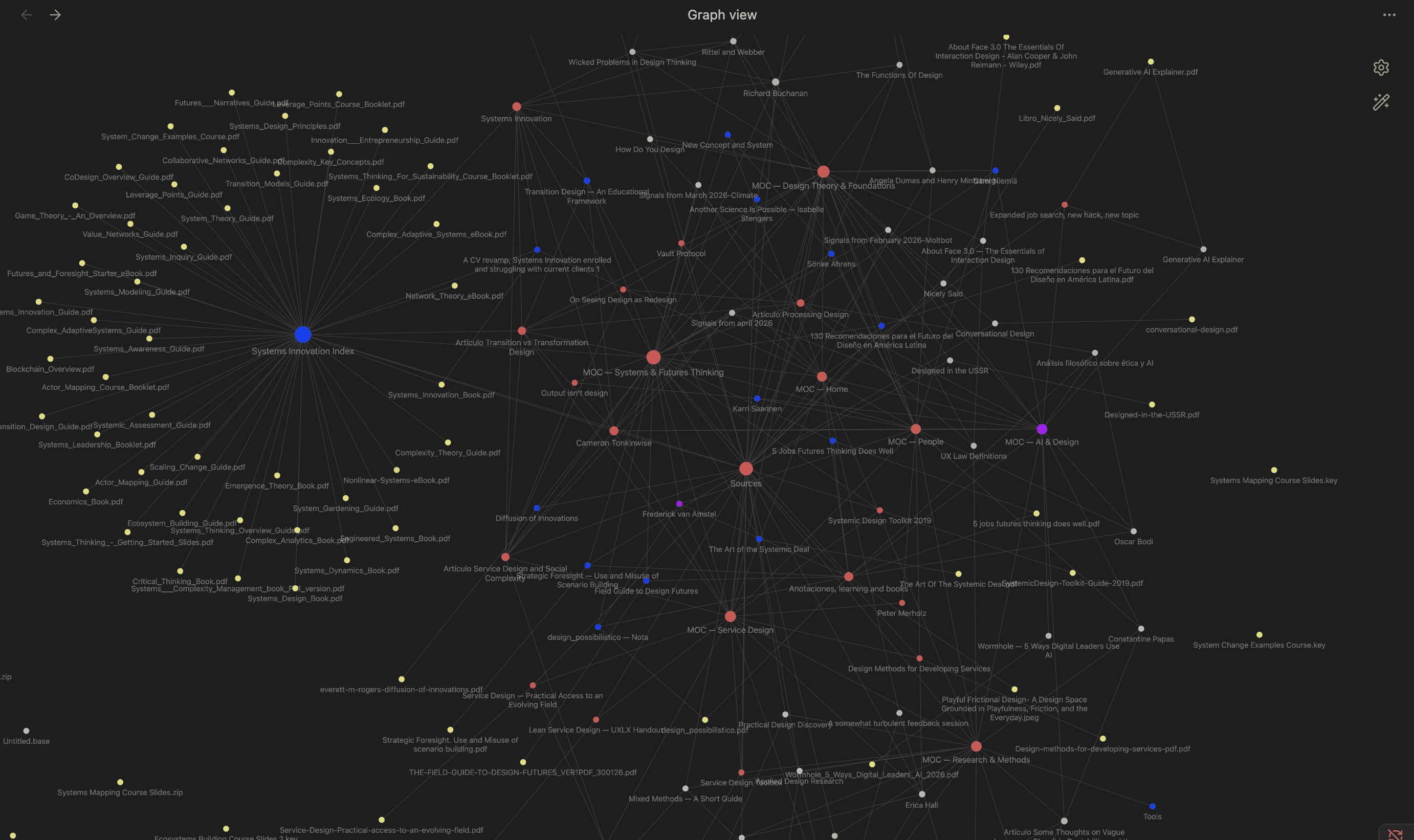
Cleaning up the clutter
I never really found any note taking app good for me. Notion, Apple Notes, Evergreen, etc. I have saved a lot of real intellectual work from incredible people and notes from my studies (annotated PDFs, articles, papers design frameworks, course material, etc) but it still felt scattered, like a Google Drive Folder. A saving system or note taking app is not enough. LLMs on their own are no good either, because retrieval of information is not optimized if you use it in this context. Everything is in-but there, in the void of the folder or the vault, nothing is truly connected.
Defining themes
Starting is the tricky part, because you cover a lot of ground across different types of concepts you gather around design. So I used Claude to fully audit saved files on my local computer disc and browser's bookmarks. My first iterations contained periodic notes (daily, weekly, etc) but it slowly turned into Notion, which wasn't the objective. Instead, I went for a taxonomy and type approach, building six thematic Maps of Content, creating twenty-two companion notes for PDF sources and templates.
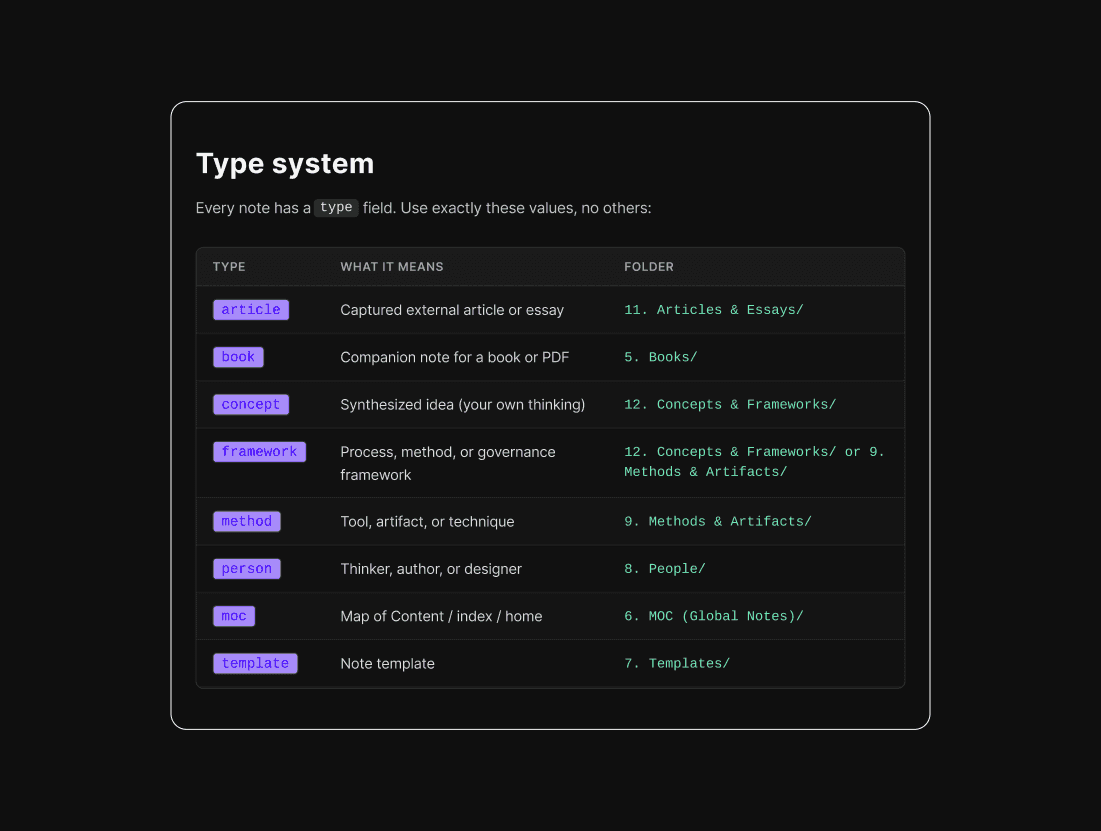
Claude's role: design the protocol for standards
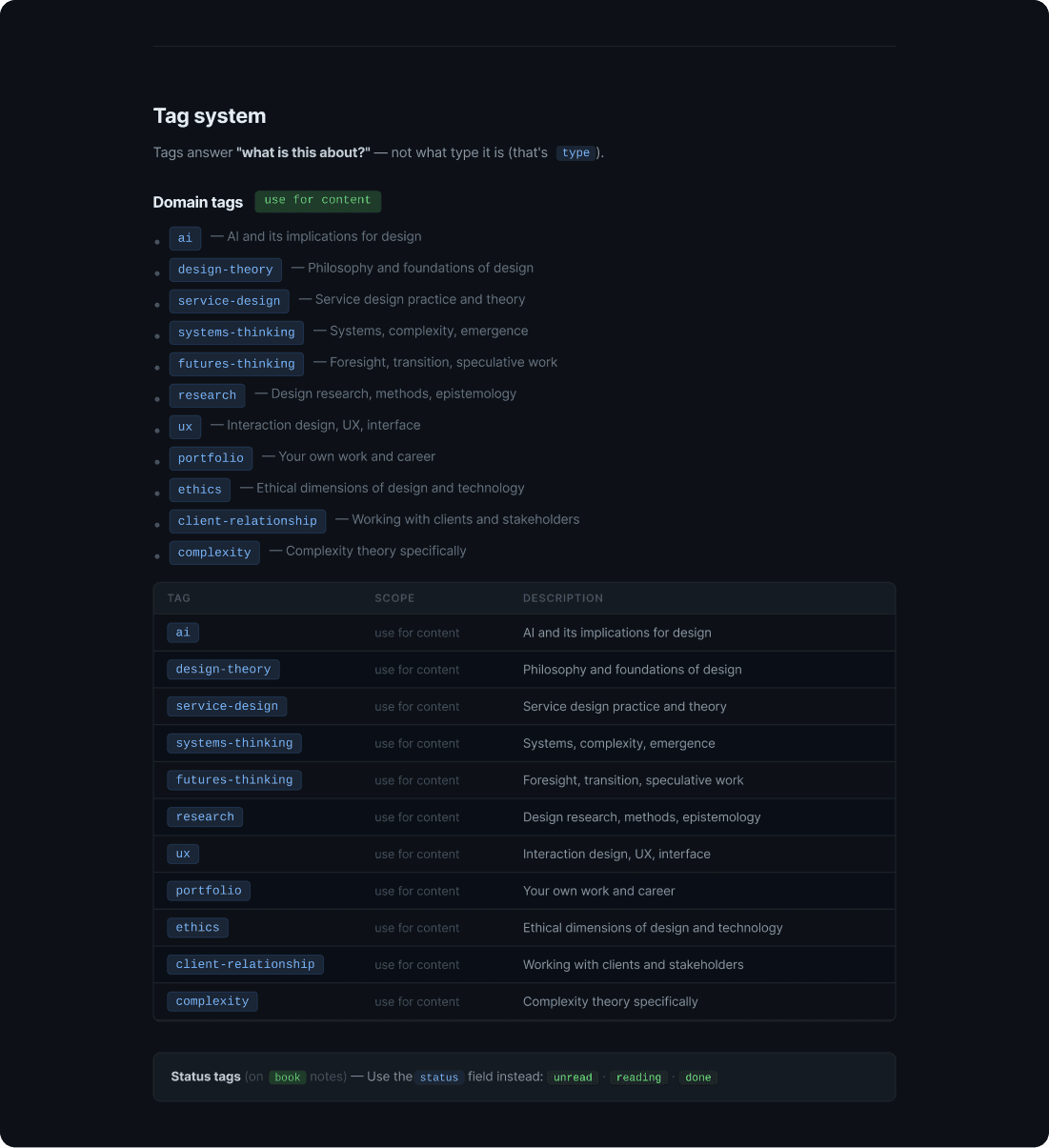
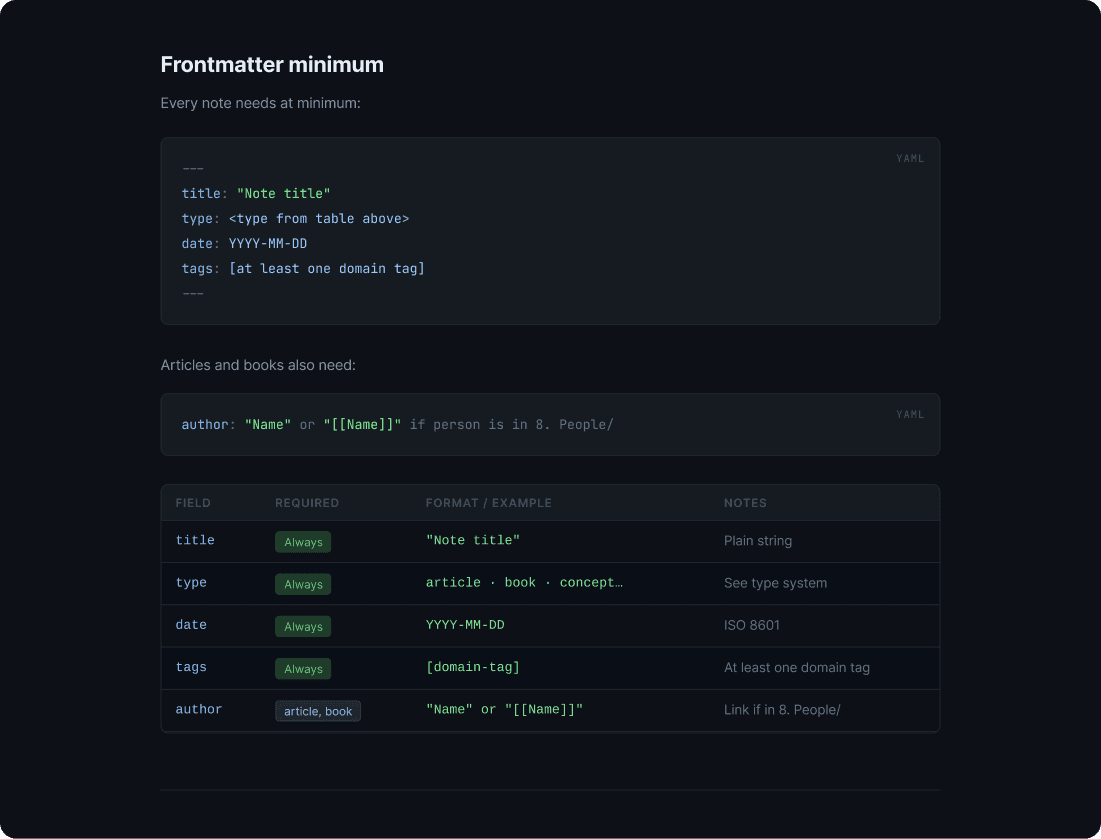
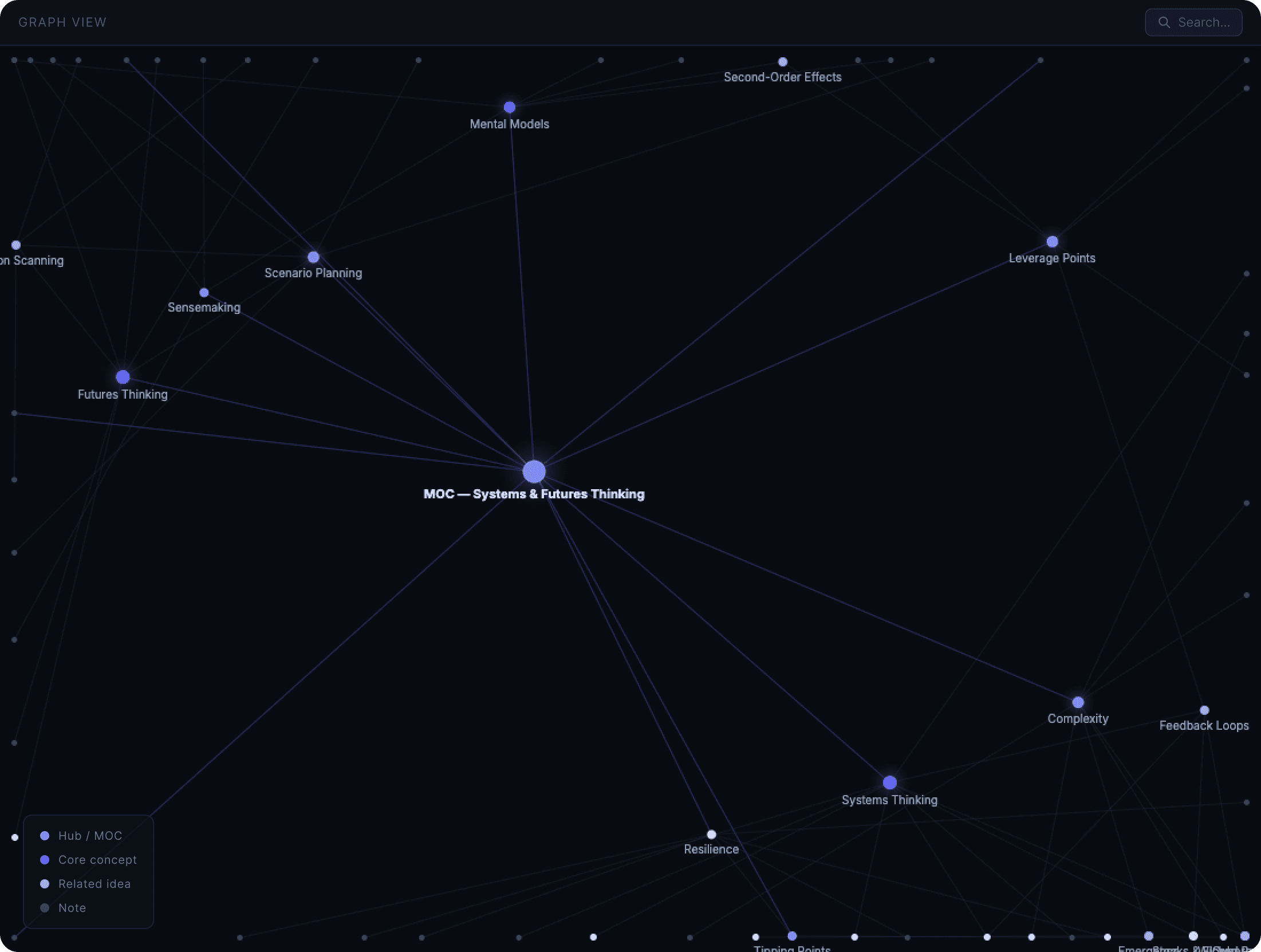
To preserve the connected content, I designed a two-layer system: 1. a type + tag taxonomy at the note level, and 2. Maps of Content as a navigational layer above it. Types classify what a note is (article, book, concept, framework, person). Tags classify what it's about. All hold on together by the MOC entity to avoid clutter. The PDF annotation protocol is super cool: using an Obsidian Plug-In, highlighting in a PDF automatically pastes a formatted callout into a note created from the PDF, like a cheat sheet. No copy, no tab-switch, no friction.
Outcomes
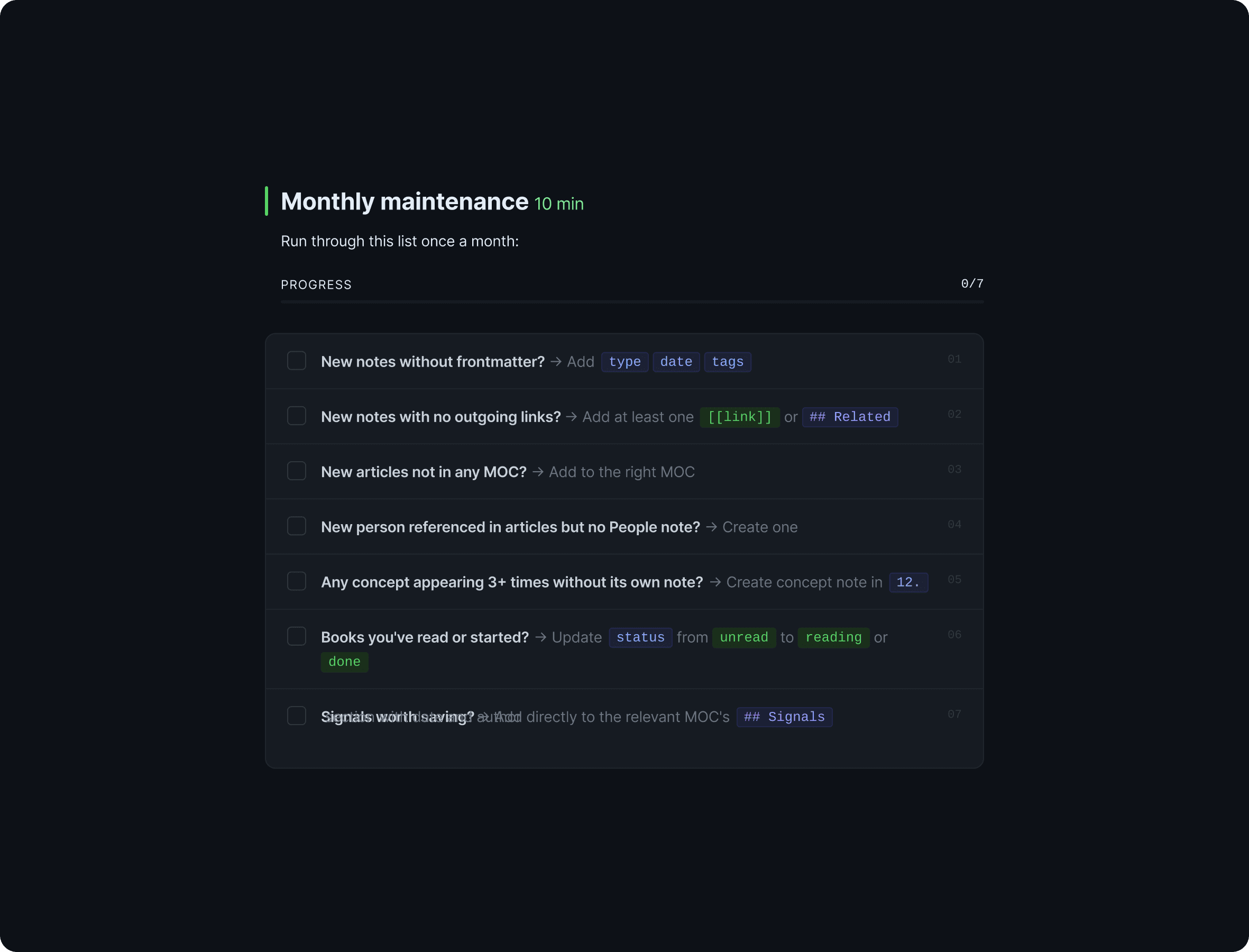
The vault went from an unstructured accumulation of great ideas to a navigable network, all supported by a protocol for monthly maintenance. The annotation pipeline enhanced my readings and connections, which is triggered by auto-paste directly into the active note. In the end, the system is only as good as the habit of connecting. This is my greatest take away: organizing things made a clear system, and a habit emerged.